

Paying attention to your customer experience directly impacts your bottom line. Companies that are “customer-centric” are 60% more profitable than those that aren’t. In this digital age, customers also expect more from those they do business with.
In today’s world, people can order something on their phones and see it on their doorstep the next day. Keeping up with expectations means leveraging the right technology.
As 2027 is on the horizon, it’s the perfect time to improve your customer experience. Thanks to cloud technology, you don’t have to spend a fortune to do it. Just put in place some of the applications below that focus on making leads and customers happy.
1. Online Survey Application
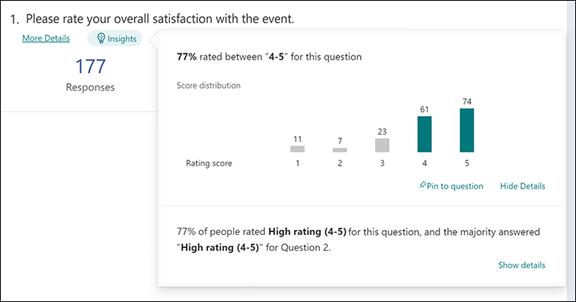
If you have Microsoft 365, you already have one built in. Surveys remain one of the cheapest ways to find out what your customers actually think — fillable on any device, with results compiled instantly so you’re acting on feedback in days, not months.
2. Smart Chat Bot
The “chatbot” of a few years ago answered scripted FAQs; what businesses are deploying now are AI agents that retain context across a conversation (and across previous interactions), interpret intent rather than matching keywords, and can complete multi-step tasks — checking an order status, rescheduling an appointment, or escalating to a human with full context already attached — without a person needing to hand-hold the exchange.
Customers still want a human for anything nuanced or emotionally charged, so the winning setup pairs an AI agent for speed and availability with a clear, fast handoff to a person when it matters.
Putting a smart chatbot on your business website can improve customer satisfaction. It allows people to get an answer right away. They can also get that answer any time of day or night.
68% of consumers like chatbots because they give them fast answers to questions. While they can’t answer every single question, they can handle quite a few. For example, chatbots can take 75-90% of questions in healthcare and banking.
3. Business Mobile App
More customers reach a business through a phone than a desktop browser, and that gap keeps widening. A mobile app that lets customers order, get support, or jump on a call without leaving the app removes friction at exactly the point where people are most likely to give up and go elsewhere.

4.Messenging App Support
Meeting customers where they already chat still matters — but which app that is has shifted. WhatsApp has pulled well ahead of Facebook Messenger in global usage, and for many businesses it’s now the more natural channel to support, alongside Instagram DMs and other messaging platforms your customers actually use day to day. The principle from a few years ago still holds: if customers can message you the same way they message their friends, they will.
5. VoIP Phone System with Mobile App
One number, everywhere — desk, home office, mobile — is still the standard worth aiming for. The bar has risen on the mobile side: the app needs to be genuinely usable, not just a stripped-down afterthought, since it’s often the version staff actually rely on.
6. Text Notification Apps
Appointment reminders, sale notices, shipping alerts — still one of the highest open-rate channels available. But there’s a compliance change every Australian business using branded SMS needs to know about: from 1 July 2026, the ACMA’s new SMS Sender ID Register requires any business sending texts under a business name (rather than a phone number) to register that sender ID. Unregistered senders will have their messages marked “Unverified” and risk being filtered alongside scam texts — including messages sent on your behalf by booking systems, CRMs, or marketing platforms.
7. All-in-One CRM & Sales Platform
A single customer record, visible to sales and support alike, is still the backbone of good customer experience — and it’s become more important, not less, as customers increasingly research purchases using generative AI before they ever reach your sales funnel. A CRM that captures that fuller picture, rather than just transactional history, gives your team the context to meet customers where they actually are in their decision.
This improves the customer experience and results in fewer dropped balls. Efficiency and productivity improves as well because everyone is on the same page.
Get Help with Customer-Facing Technology Support
It’s easy to get lost in a sea of different cloud applications. Contact us today for help navigating to a better customer experience!